
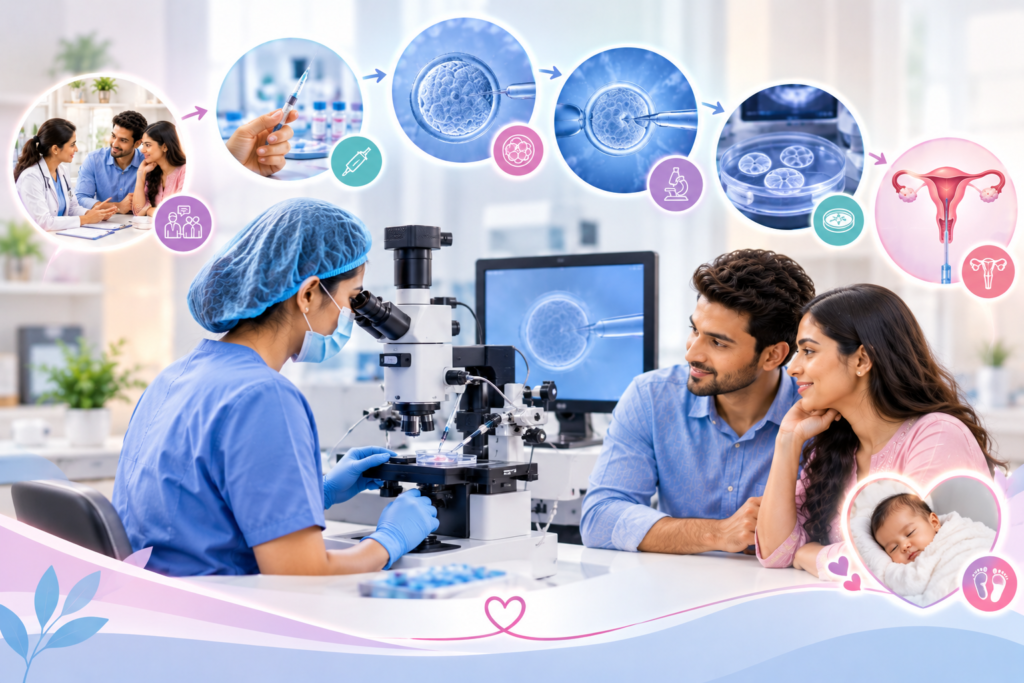
Fertilization may sound like a simple biological event, but it involves an extraordinary sequence of interactions between an egg and sperm. For some couples, this process may not happen easily without medical assistance. This is where Intracytoplasmic Sperm Injection (ICSI) can become an important option within an IVF treatment plan.
ICSI is a specialized laboratory fertilization technique developed to help selected couples facing particular fertility challenges. It does not replace the entire IVF process; instead, it addresses the fertilization stage with highly precise laboratory assistance.
At a trusted Fertility Centre in Junagadh, couples can discuss their fertility history, undergo appropriate investigations, and understand whether ICSI may be suitable for their individual situation.

Understanding Why Fertilization May Need Assistance
For natural fertilization to occur, sperm must reach the egg and successfully interact with it. Several factors can make this process difficult.
Male-factor fertility concerns may include:
- Low sperm count
- Reduced sperm movement
- Certain sperm-quality concerns
- Difficulty obtaining sperm through ejaculation
- Previous fertilization problems during IVF
However, fertility challenges can involve female factors as well, and sometimes the reason for reduced fertilization is not immediately obvious.
A specialist at a Fertility Centre in Junagadh can evaluate both partners before recommending an appropriate treatment approach.
What Happens During ICSI?
The remarkable part of ICSI happens inside the fertility laboratory.
Following egg retrieval during an IVF cycle, mature eggs are identified. The embryology team carefully selects an appropriate sperm and, using specialized laboratory equipment, injects a single sperm directly into the mature egg.
The process can be understood in simple steps:
Egg retrieval → Sperm preparation → Sperm selection → Microinjection → Fertilization assessment → Embryo development
This microscopic procedure requires specialized equipment and skilled embryology professionals.
This is why ICSI treatment in Junagadh is not simply an additional injection—it is a carefully controlled laboratory procedure requiring precision at every stage.
Who May Benefit From ICSI?
ICSI is not automatically necessary for every person undergoing IVF. A fertility specialist considers the couple’s individual circumstances before recommending it.
It may be considered when there are certain male-factor infertility concerns, previous IVF fertilization difficulties, or other specific clinical circumstances.
The best IVF center in Junagadh should explain why ICSI is being recommended rather than presenting it as a compulsory part of every IVF cycle.
This allows couples to understand their treatment rather than simply following a procedure without knowing its purpose.
ICSI and IVF: How Are They Connected?
A common source of confusion is thinking that IVF and ICSI are completely separate treatments.
IVF is the broader treatment process. It may include ovarian stimulation, egg retrieval, laboratory fertilization, embryo culture, and embryo transfer.
ICSI is one method that can be used to achieve fertilization during an IVF cycle.
With conventional IVF, prepared sperm and eggs are placed together in the laboratory and fertilization is allowed to occur. With ICSI, a selected sperm is directly injected into a mature egg.
Your fertility specialist can explain which fertilization method is appropriate for your circumstances.

What Happens After the Injection?
ICSI does not end when the sperm is injected.
The fertilized egg is carefully observed to determine whether fertilization has occurred normally. If an embryo develops, the embryology team monitors its progress over the following days.
Depending on the treatment plan, an embryo may subsequently be considered for transfer into the uterus.
At the best IVF center in Junagadh, couples can discuss how laboratory development and clinical decisions are connected throughout the IVF process.
Does ICSI Guarantee Pregnancy?
This is one of the most important questions couples should ask.
No fertility treatment can guarantee pregnancy or a live birth.
ICSI is designed to assist the fertilization stage in selected situations. Fertility outcomes depend on numerous factors, including age, egg quality, sperm characteristics, embryo development, reproductive health, and other individual circumstances.
Therefore, couples should approach ICSI treatment in Junagadh with realistic expectations and discuss their individual prognosis with their fertility specialist.
Preparing for an ICSI Journey
Good fertility care begins with preparation.
Couples can help themselves by:
- Attending recommended investigations
- Sharing complete medical history
- Taking prescribed medicines correctly
- Maintaining healthy lifestyle habits
- Avoiding smoking and alcohol
- Keeping scheduled appointments
- Asking questions about unfamiliar procedures
- Following post-procedure instructions
Do not begin supplements or medicines based solely on online recommendations.
At a patient-focused Fertility Centre in Junagadh, individualized advice can help couples understand what preparation is appropriate for their circumstances.
The Emotional Side of Microscopic Science
ICSI takes place at a microscopic level, but its emotional meaning can be enormous.
For couples who have experienced unsuccessful attempts at conception or previous fertility challenges, deciding to pursue treatment may involve excitement and anxiety at the same time.
Partners can support one another by attending consultations together, discussing expectations openly, and remembering that fertility treatment is a shared journey.
The best IVF center in Junagadh can support couples by combining medical expertise with clear communication and compassionate care.
When ICSI Becomes Part of the Bigger Story
For some couples, ICSI treatment in Junagadh may represent an important step within their IVF journey. For others, conventional IVF fertilization may be appropriate.
There is no universal treatment that is best for everyone.
A qualified fertility specialist considers the medical evidence available for each couple before recommending a treatment plan. This personalized approach helps ensure that advanced reproductive technology is used thoughtfully rather than routinely.
Conclusion
When fertilization needs a helping hand, ICSI provides a highly specialized laboratory approach that can assist selected couples during IVF treatment. From careful sperm selection to precise microinjection and embryo monitoring, every stage requires expertise and attention to detail.
A comprehensive Fertility Centre in Junagadh can help couples understand their fertility concerns and available treatment pathways. The best IVF center in Junagadh can provide individualized IVF care and explain whether ICSI may be appropriate. When medically indicated, ICSI treatment in Junagadh can offer specialized assistance at the fertilization stage.
Behind every microscopic procedure is a very human dream.
One carefully selected sperm. One precious egg. One extraordinary possibility—and a couple hoping that science can help their family story move forward.